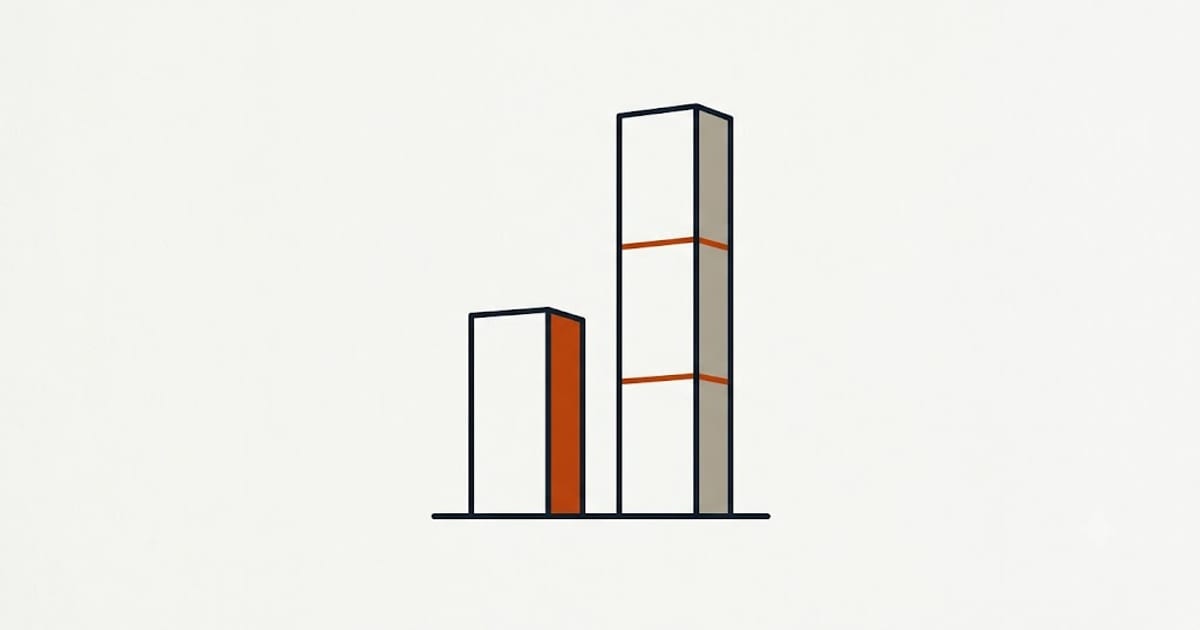
The apparent saving is large. A 12 × 16 room quotes at roughly $1,677 and its materials cost $333. That looks like $1,344 for a weekend.
It is not a weekend, and it is not $1,344. It is still worth doing, for the right half of the job.
What has to be bought
Assuming a drill, a utility knife and a tape measure already exist.
| Item | Cost |
|---|---|
| Drywall screw gun or depth-setting bit | $25–90 |
| Drywall T-square, 48 in | $28 |
| Taping knives — 6 in, 10 in, 12 in | $45 |
| Mud pan | $14 |
| Corner tool | $18 |
| Pole sander + screens | $35 |
| Rasp | $12 |
| Utility knife blades | $8 |
| Dust masks, N95 | $15 |
| Minimum tool spend | $200–265 |
Then the rentals:
| Rental | Per day |
|---|---|
| Drywall lift (ceilings) | $35–55 |
| Panel carry / sheet lifter | $12 |
| Vacuum sander | $40–60 |
And the haulage: a 12 × 16 room's offcuts and dust fill more than a car boot, and old board from a tear-out fills a small trailer.
Realistic first-time all-in on tools and rental: $280–400.
The revised saving
| Hire | DIY | |
|---|---|---|
| Materials | included | $333 |
| Tools and rental | — | $340 |
| Labour | $1,344 | your time |
| Cash | $1,677 | $673 |
A genuine $1,000 saved on this room, with the tools then owned for the next one — which is the real argument, because the second room saves $1,340.
The calendar
This is what estimates leave out, and it is the reason DIY drywall drags.
| Day | Work | Hours |
|---|---|---|
| Sat | Hang walls and ceiling | 8–10 |
| Sun | Tape and bed all joints | 5–7 |
| Mon–Tue | drying | 0 |
| Wed | Second coat | 3–4 |
| Thu | drying | 0 |
| Fri | Third coat | 3–4 |
| Sat | drying, then sand | 3–4 |
Roughly 25 hours of work spread across eight days, because all-purpose compound needs 24 hours between coats and coating over compound that is still dark in the middle of the joint is what makes joints shrink after painting.
Setting-type compound compresses this — 90-minute mud lets two coats go on in a day — at the cost of being unforgiving and nearly unsandable. Which compound to use where matters more on a DIY schedule than on a professional one.
Which half to do yourself
Hang it yourself. Hanging is heavy, awkward and forgiving. A gap under 1/4 in disappears under tape. Cuts do not have to be beautiful. The skill floor is low and the physical demand is the main barrier — a 4×12 sheet of 1/2 in board is 77 lb and a ceiling needs a lift or a second person.
Consider hiring the finishing. Finishing is where a DIY job announces itself, and the tell is not a bad joint — it is a joint that is too proud, feathered over 6 inches instead of 14, which throws a shadow under any light at an angle.
A finisher will charge 10–20% over their normal rate to finish someone else's hanging, and it still lands well under a full quote. On the 12 × 16 room, hang-it-yourself plus hired finishing runs about $1,050 — saving $600 and removing the entire skilled portion.
Where beginners lose the money back
Sanding instead of feathering. Applying too much compound and sanding it flat is slow, produces enormous dust, and cuts through the tape edges. Three thin coats each wider than the last is faster and needs almost no sanding.
Over-driving screws. A screw that breaks the face paper holds nothing. A depth-setting nose costs $8 and prevents it; a plain drill does not.
Skipping the primer. Bare paper and dried compound absorb paint differently, and a topcoat straight onto a level 4 wall photographs every joint. PVA drywall primer is cheap and not optional.
Not renting the lift. Two people holding a sheet overhead while a third drives screws is how sheets get dropped and shoulders get hurt. $45 removes the whole problem.
When to just hire it
Whole-house jobs. The calendar above multiplied by ten rooms is a season, and crews get economies you cannot.
Ceilings above 9 ft, or any stairwell. Staging, and the consequences of falling.
Any job where the finish must be level 5. Skimming an entire wall evenly is genuinely difficult, and it is the one part of the trade where practice is the only route.
Repairs into existing walls. Patching is priced by the visit and does not scale, so a $200 patch is $200 whether or not you own knives — and matching an existing texture is harder than any part of a new install.