Screws & Tape
Screw counts by spacing and framing, and how much tape a room really needs.
Drywall screws are the cheapest material on the job and the source of the most visible defects on a finished wall.
Which screw
Coarse thread for wood framing — the aggressive thread pulls the board tight to a stud. Fine thread for steel studs — coarse threads chew out light-gauge steel and spin without holding.
Length is board thickness plus at least 5/8 in of penetration into wood framing: 1 1/4 in for 1/2 in board, 1 5/8 in for 5/8 in board. Longer is not better — a screw driven deep into a stud does nothing extra and finds wiring more often.
How many
Code sets maximum spacing rather than a count. For walls, 16 in on center along framing. For ceilings, 12 in — the tighter spacing is what keeps a ceiling from sagging between framing under its own weight and the weight of the compound on it.
A 4 × 8 sheet on walls at 16 in o.c. takes about 28 screws; the same sheet on a ceiling at 12 in o.c. takes about 36. Figure 1 lb of screws per 300–350 ft² of board and buy the 5 lb box.
Field screws are the ones people forget: the perimeter row is obvious, the intermediate rows down the middle of the sheet are not, and a sheet fastened only at its edges is the one that cracks.
Depth
The screw head must dimple the paper without breaking it. A broken face paper holds nothing — the board is then attached by friction on the gypsum core, which is to say not attached.
A drywall gun with a depth-setting nose does this reliably; a drill does not, and every over-driven screw is a repair later.
Why screws pop
Almost never the screw. Nearly every pop is lumber shrinking.
Framing delivered green dries to about 8% moisture content inside a heated house, and a 2×4 loses roughly 1/8 in across its width doing it. The board stays where it is; the stud pulls back from it; the screw head rides forward through the compound.
Which is why pops appear in the first heating season and rarely afterward, why they cluster on exterior walls, and why the fix is to drive a second screw an inch or two away, then back out or re-set the popped one — refilling alone leaves the same screw to pop again.
Glue helps more than fastener count: construction adhesive on the framing with screws only at the perimeter is a common commercial spec, and it moves with the wood instead of fighting it.
What to check before boarding
Whether the framing is flat. A stud crowned 1/4 in proud of its neighbors is visible under a raking light forever, and it takes ten seconds to plane before the board goes on.
2 articles
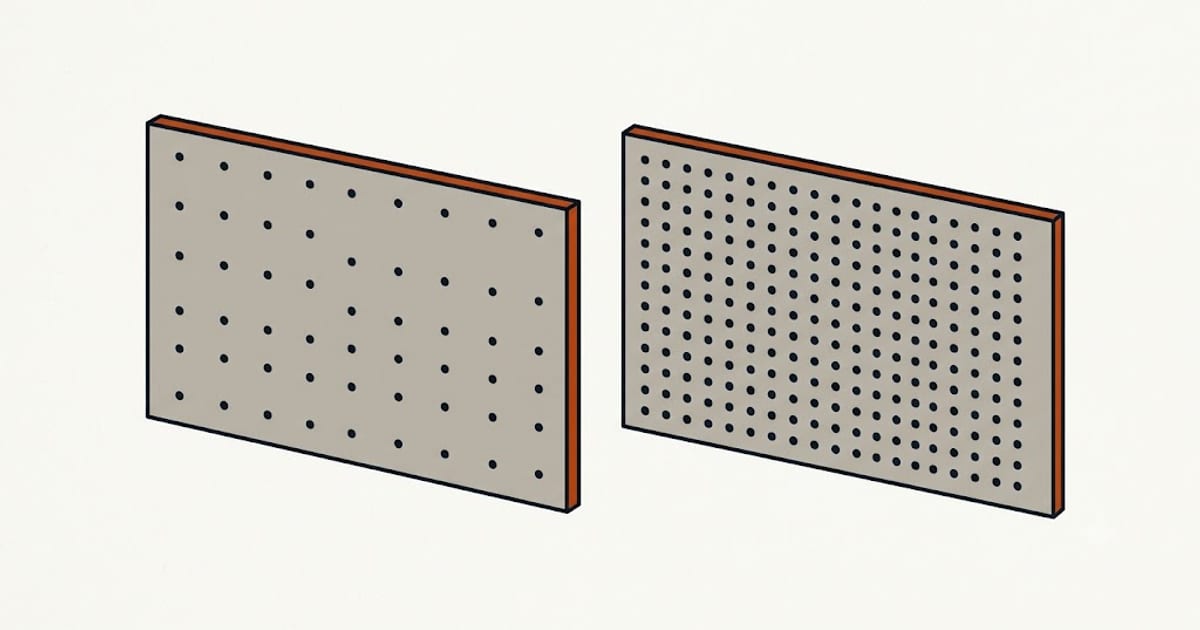 How Many Drywall Screws per Sheet — 32 on Walls, 40 on Ceilings
A pound of screws is about 300. Buying by weight and hoping is how a job stops on a Sunday afternoon.
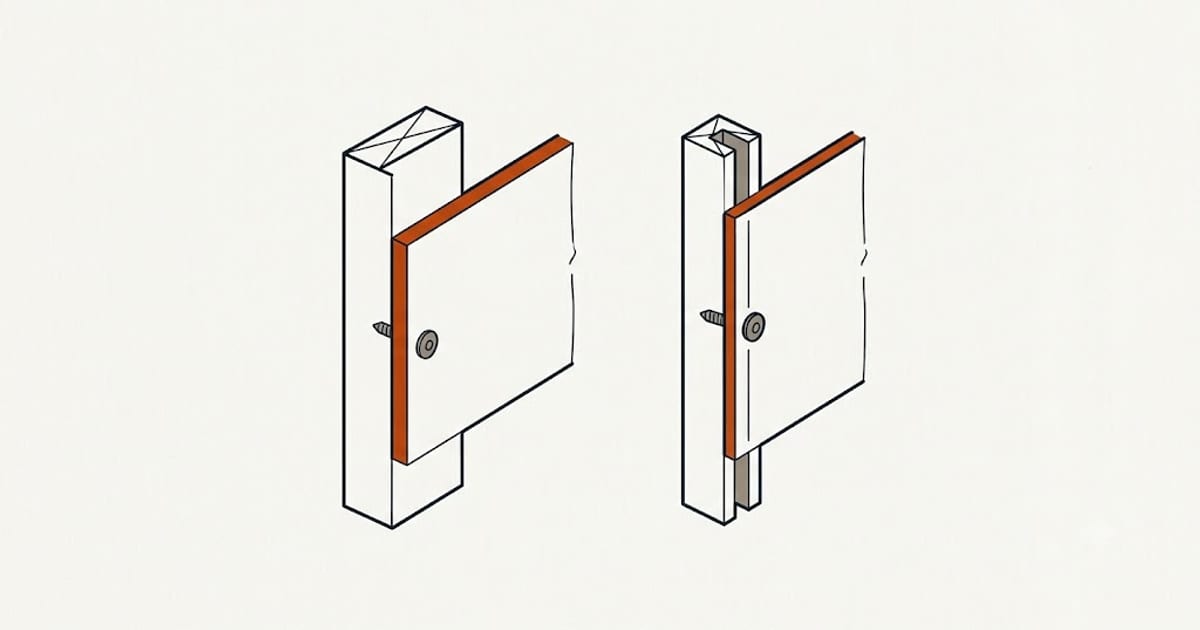 Why Drywall Screws Pop, and the Repair That Actually Holds
A screw pop is not a fastener failure. It is the stud drying out and moving away from a board that stayed where it was — which is why refilling the hole alone never works.